
Conversion Rate Optimization | A/B Testing
Conducted A/B tests to optimize website pages used for advertisements. The tests included copy changes, design changes, layout changes and more.
Understanding the Pain Points
Before launching A/B tests, I began with in-depth behavioural research using tools like Crazy Egg to record user sessions and analyze key engagement metrics — including scroll depth, rage clicks, and heat maps. These insights reveal how visitors actually interact with a page and where friction points occur. For example, I discovered that users were scrolling past key CTAs, missing lead forms, and rage-clicking on unclear headlines or broken links, all of which signal opportunities for optimization.
Based on these findings, I developed and prioritized a series of targeted A/B tests — from repositioning CTAs and refining content flows to fixing UX bugs — and mapped them out across a quarterly testing roadmap. This research-driven process ensures every experiment directly addresses real user behaviour and drives measurable increases in lead conversions.



Turning Experiments into Scalable Wins
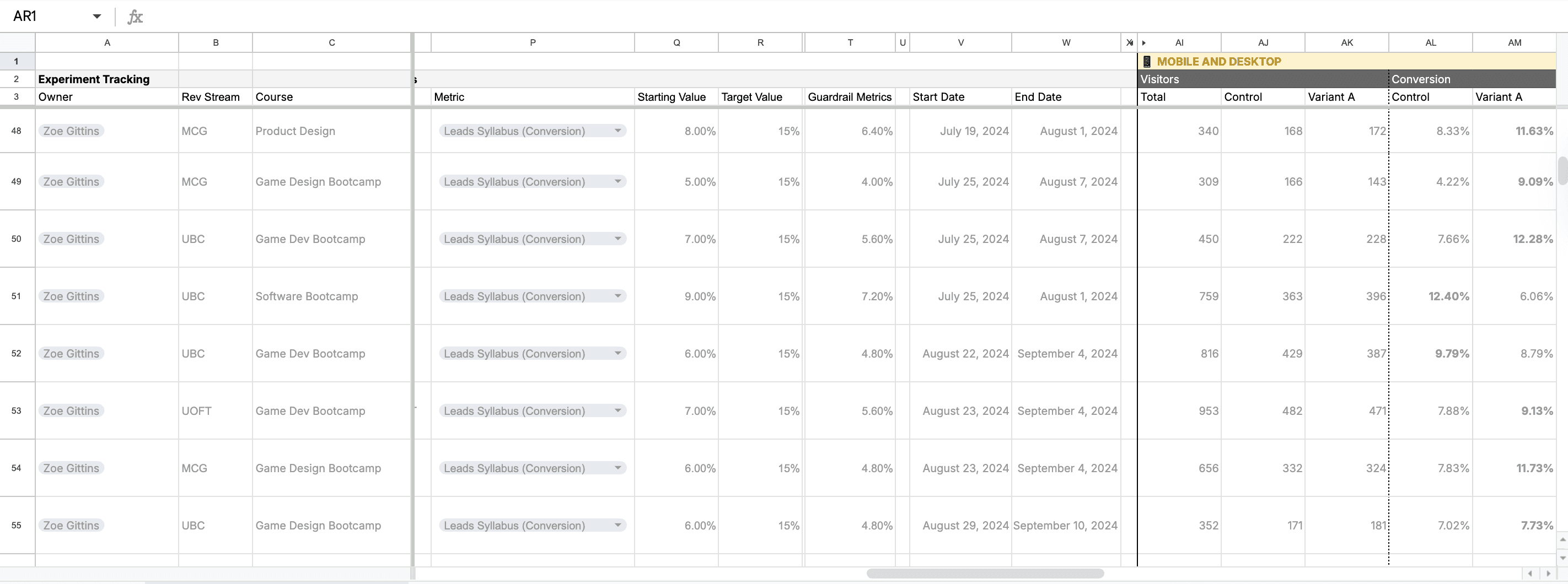
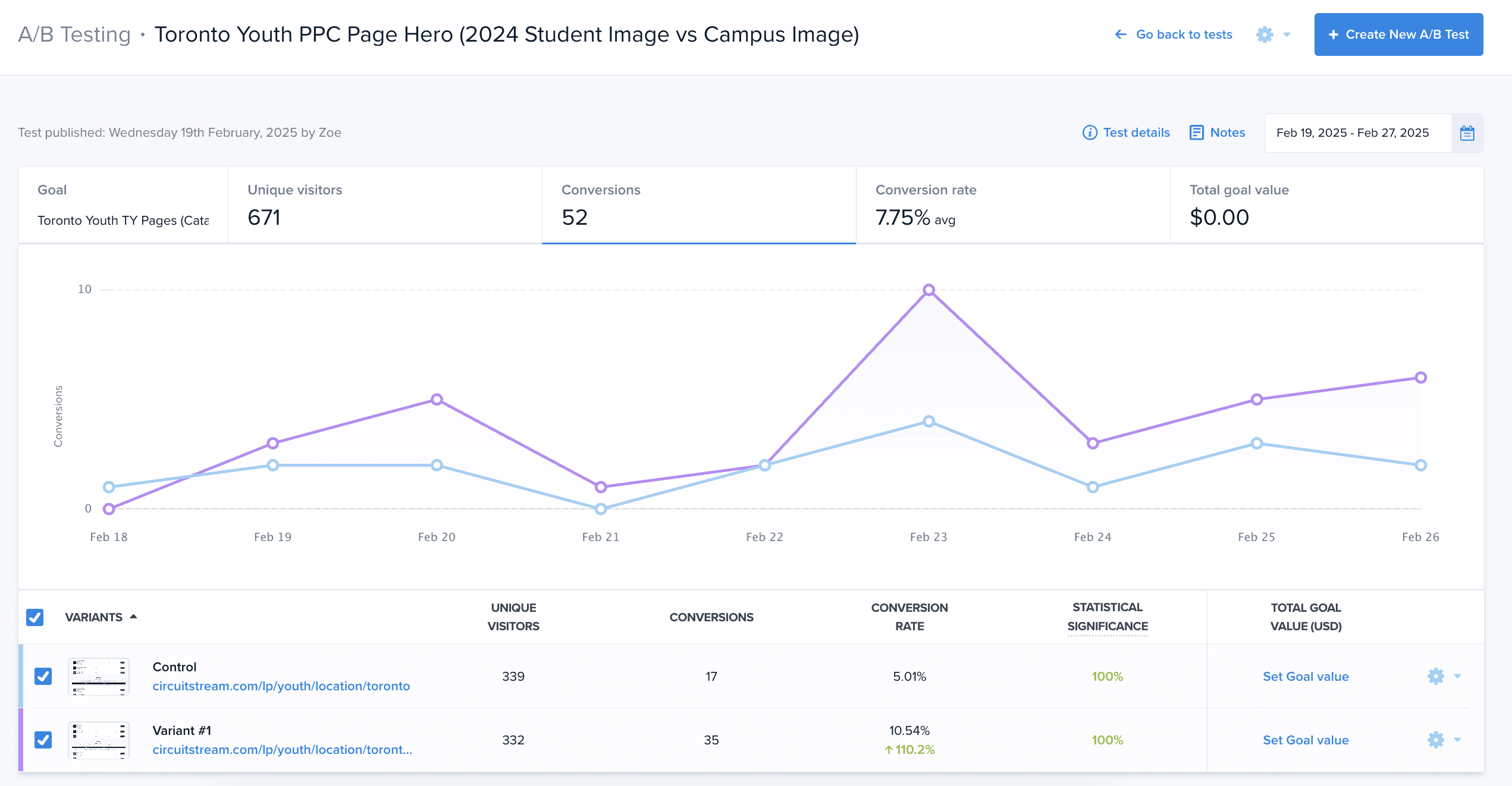
Once potential improvements were identified, each hypothesis was tested through a 50/50 traffic split between the control and a new variant. Every test was monitored closely for shifts in conversion rate, ensuring decisions were grounded in statistical significance rather than intuition. When a variant proved successful, those insights were rolled out across other lead-generation pages to compound the impact.
Results and learnings were shared with key stakeholders—including the founders and product leadership—to inform future tests and align upcoming experiments with broader business goals. Each cycle built on the last, transforming experimentation into a repeatable, data-driven growth process.
In Conclusion
The conversion optimization process wasn’t just about tweaking layouts or headlines—it was about creating a clearer, more intuitive path for users to take action. By grounding every decision in behavioral data, testing with purpose, and iterating on real results, we turned insights into measurable growth. The improvements in conversion rate and cost per lead proved that thoughtful experimentation and evidence-based design can deliver meaningful business impact—one test at a time.